| | | | | | | | | |  | | | | | |
|
| |
|
|---|
|
| | | | | Community Forest Resource Rights in India: Centre for Environment & Development's (CED) multi-year multi-state initiative |
| | | | | 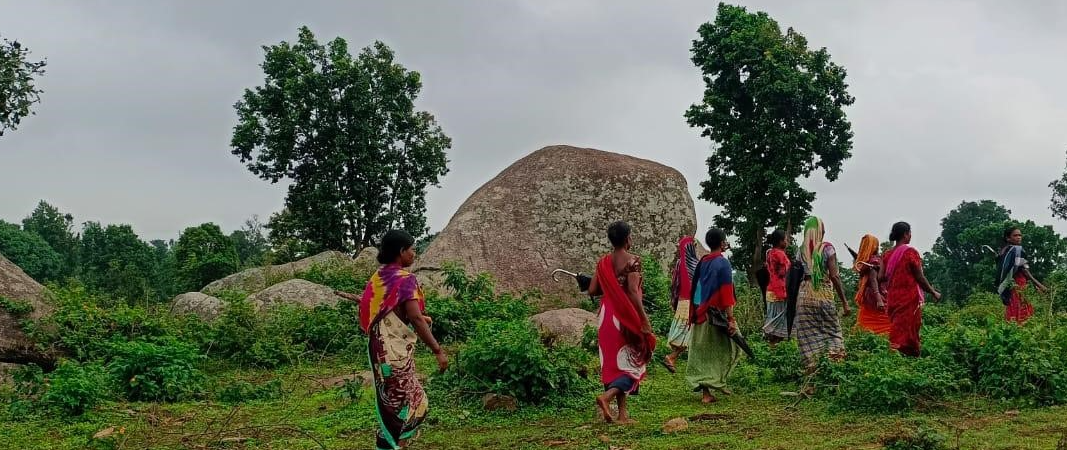 | | |
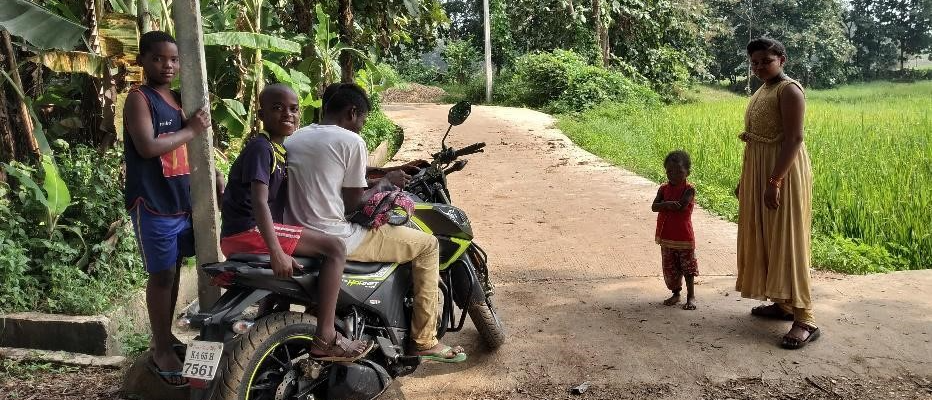
| The need for decentralizing and democratizing forest governance has been recognized in international forestry circles for quite some time. India has been at the forefront of such thinking, right from the days of the Chipko Andolan in the 1970s. The Scheduled Tribes and Other Traditional Forest Dwellers (Recognition of Forest Rights) Act 2006, commonly called the FRA, is a landmark legislation in the history of independent India as it provides a legal foundation for this process. It recognizes the multiple historical injustices imposed on forest-dwellers in India, particularly in central India and takes a rights-based approach to redressing them. Perhaps the most important, but least implemented, rights provisions in the FRA are the community’s right to manage forests within the customary boundary of the village (community forest resource or CFR right). The CFR rights, if recognized, can potentially transform forest governance in India, because they decentralize the authority of forest management to Gram Sabhas (the village general body). They offer the best chance of a transition from colonial forestry or de facto open-access situations to socially just and ecologically sustainable forest conservation and regeneration in India, on the lines of the 1992 Community Forestry law in Nepal or the ejidos of Mexico. The CFR Initiative (cfr.atree.org) in ATREE’s Centre for Environment & Development seeks to facilitate this transition, through a range of research (academic, action and policy-oriented), outreach, and training projects on CFR potential estimation, analyzing bottlenecks to and building capacity among communities and administration for claiming and recognizing CFR rights and for CFR management planning, and understanding the impacts of CFR management efforts where they have fructified. Our field sites are primarily in Maharashtra, Chhattisgarh, Madhya Pradesh and Karnataka, but our support extends into Telangana, Jharkhand and other states, along with providing inputs at the national level. |
| | |
| |
|
|---|
|
| | | | | Estimating and Mapping the Potential Areas of Community Forest Resources |
| | | | | 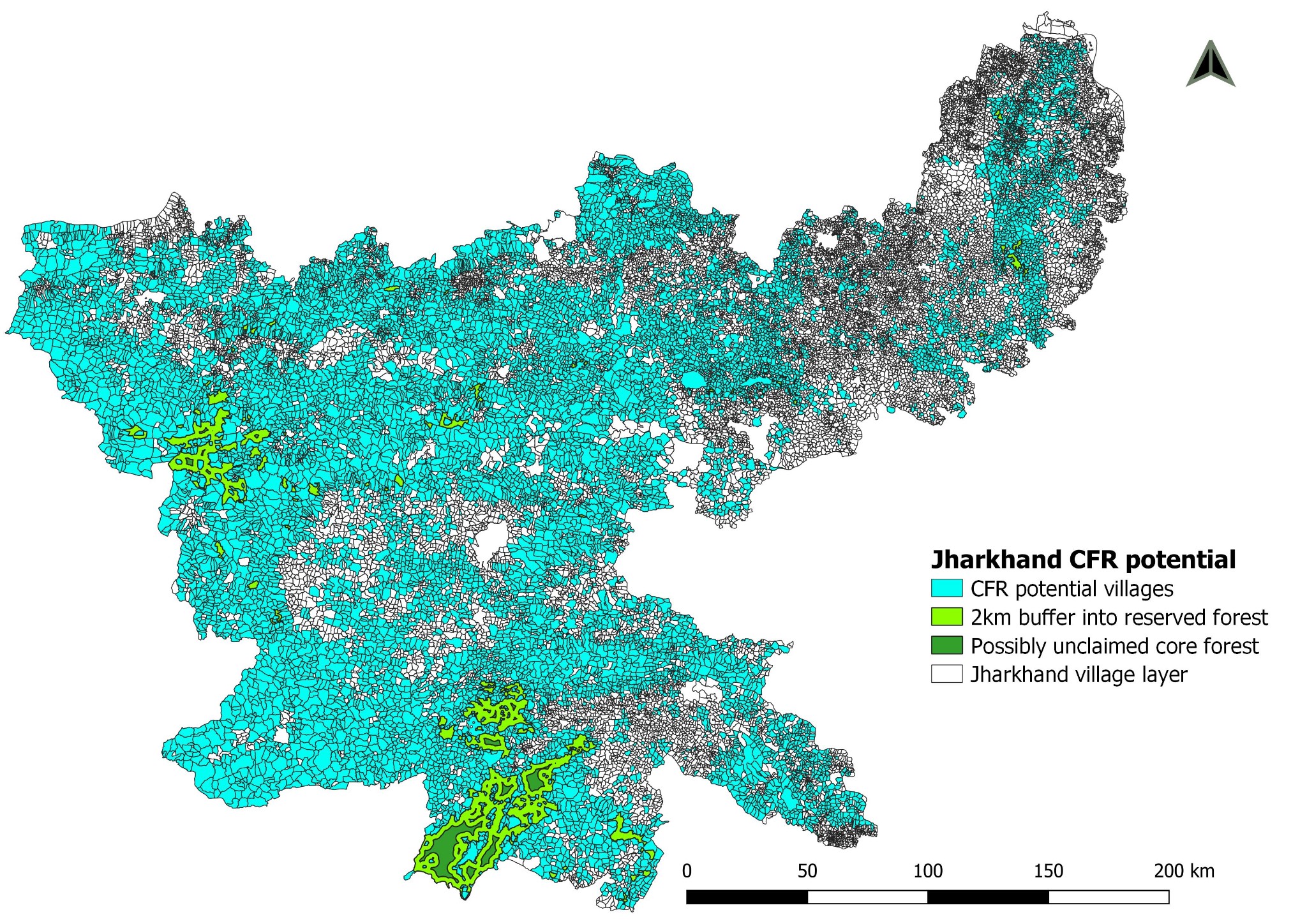 |
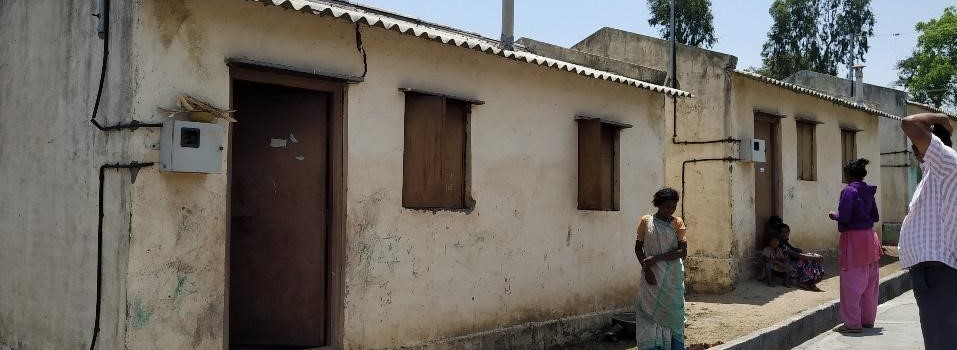
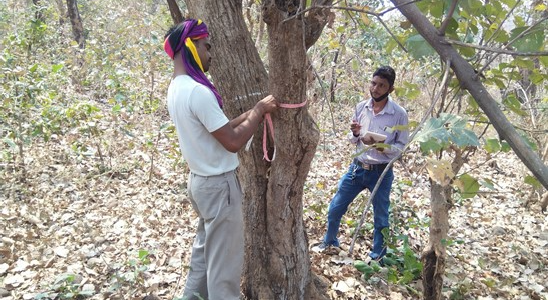
| | | The FRA was enacted in 2006, however, even after sixteen years of its enactment, the implementation of its CFR provisions has been far from satisfactory. The reasons for the non-implementation of CFR rights are multiple. Among these is a lack of clarity, both in government and among proponents of the FRA, as to where and how much forest land might be eligible for CFR rights claims and in which villages. Consequently, there is no ‘target’ that state governments must reach and against which their performance must be measured in terms of recognizing CFR rights. To address this gap, the ATREE CFR team with financial support from BRLF (Bharat Rural Livelihoods Foundation), estimated (a lower bound for) the potential area that could come under CFR rights and the locations of the villages with this CFR potential in four important central Indian states: Madhya Pradesh, Chhattisgarh, Jharkhand and Maharashtra, using a combination of Census of India data and maps, and Geographic Information System (GIS) techniques. |
| | | | |
| |
|
|---|
|
| | | | | Understanding Progress in and Barriers to CFRR Recognition in Chhattisgarh |
| | | | | 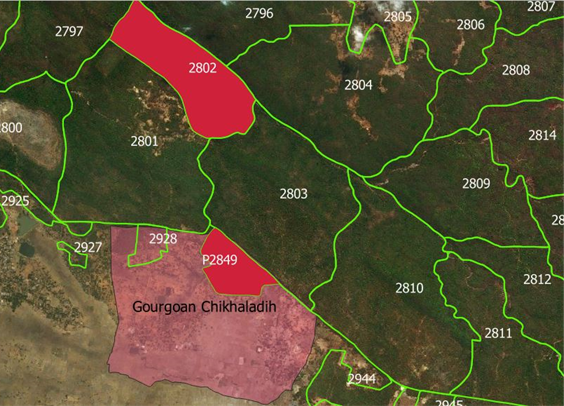 |
| | | Errors in CR titles: Gourgaon village (pink) and the compartments given under CR title (red) | | |
| | | Chhattisgarh is home to 78 lakh Adivasis and is a heavily forested state (~ 45%). Fifty per cent of the villages in the state are located within five kilometres radius of forests. Thus for inhabitants of these villages, which mainly include STs and OTFDs, forests are the primary source of livelihood. Considering the significance and relevance of CFR provisions for the state, a study was initiated to understand the nature of community forest rights and titles which were recognized in Chhattisgarh, with financial support from Oxfam India.
The recognition of FRA in the state was in two phases. The first phase was from 2008 to 2018, during which the focus was initially on only IFR rights recognition— between 2013 and 2016 there was no information on community forest rights recognized in the Monthly Status Report submitted to the Ministry of Tribal Affairs (MoTA). Subsequent reports suddenly show a large number of community forest rights granted (~ 40,000) with Chhattisgarh state reports and newspaper articles claiming it as the leading state in the country. Given that there are only around 11,000 villages having forest within, adjacent to or around their boundaries, the claimed 40,000 titles are spurious. |
| | | | |
| |
|
|---|
|
| | | Facilitating CFRR Recognition and Management in Bastar District, Chhattisgarh |
| | | | | 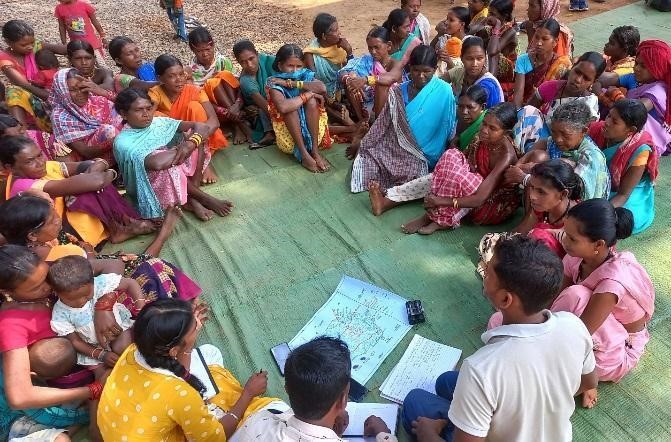 |
| | | The state of Chhattisgarh has gained a lot of positive publicity in the past half-decade for the state government’s emphasis and support for implementing the FRA and CFRR, in particular, has received a lot of impetus. The state has set bold targets for CFRR implementation and has progressed substantially in recognising CFRR claims. Bastar district holds immense potential for CFRR recognition, because of both the extent of forest area as well as the proportion of its population that is dependent on forests. Approximately 40% of the total geographical area in the district is covered by forests and around 80% of the population (or more) is dependent on forest resources for their livelihoods and subsistence. Hence, in this district, CFRR is especially relevant as more than 400 out of the 607 villages hold potential for the recognition of CFRR. The district administration in Bastar has also proceeded significantly in implementing CFRR, having recognised titles in 196 villages already. However, many of these claims are faulty, with villages being given forest areas that do not belong to them alone or sometimes even belong to another village entirely. These faulty claims, or other disagreements during the claim-making process, have triggered many conflicts between villages. |
| | | | |
| |
|
|---|
|
| | | Histories continue to perpetuate historical injustices in Karnataka’s forests |
| | | | | | | Restoration of rights of forest-dwelling communities to forest resources that were suppressed or watered down during state consolidation of forests in the Western Ghats requires that implementing agencies have a proper understanding of the histories of these forests. Take, for example, the treatment of community forest rights claims in the Uttara Kannada district. Forest dwellers here range from the politically, economically and socially powerful areca plantation owners such as Havyak Brahmins, to small-holder agricultural and/or artisanal communities such as Halakki Vokkaligas as well as a landless class who are either nomadic pastoralists like Gawlis or who eke their living through a combination of labour and sale of non-timber forest products (NTFPs) such as the Siddis - the only recognized STs in the district. While the more powerful communities managed to negotiate with the colonial administration and get their forest dependence and usage recognized through formal laws, the dependence of scattered and migrant populations of minority communities over the forests went unacknowledged. | | |
| | | | | | |
| |
|
|---|
|
| | | | | Rectifying historical injustice in the forest villages of Baiga Chak |
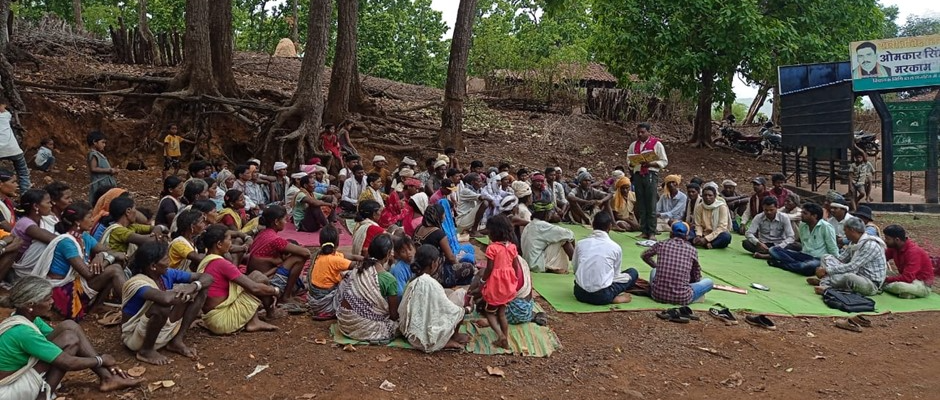
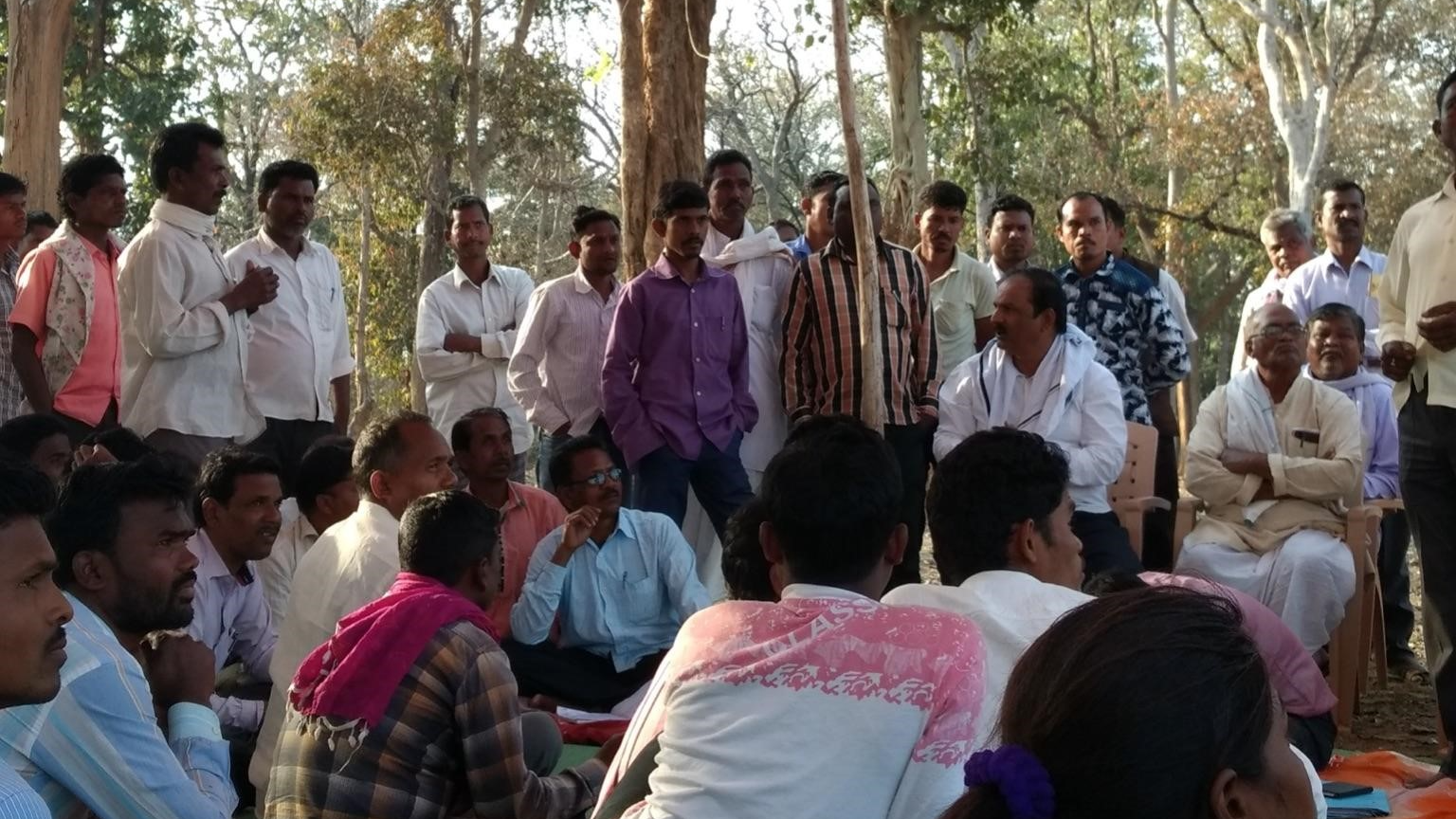
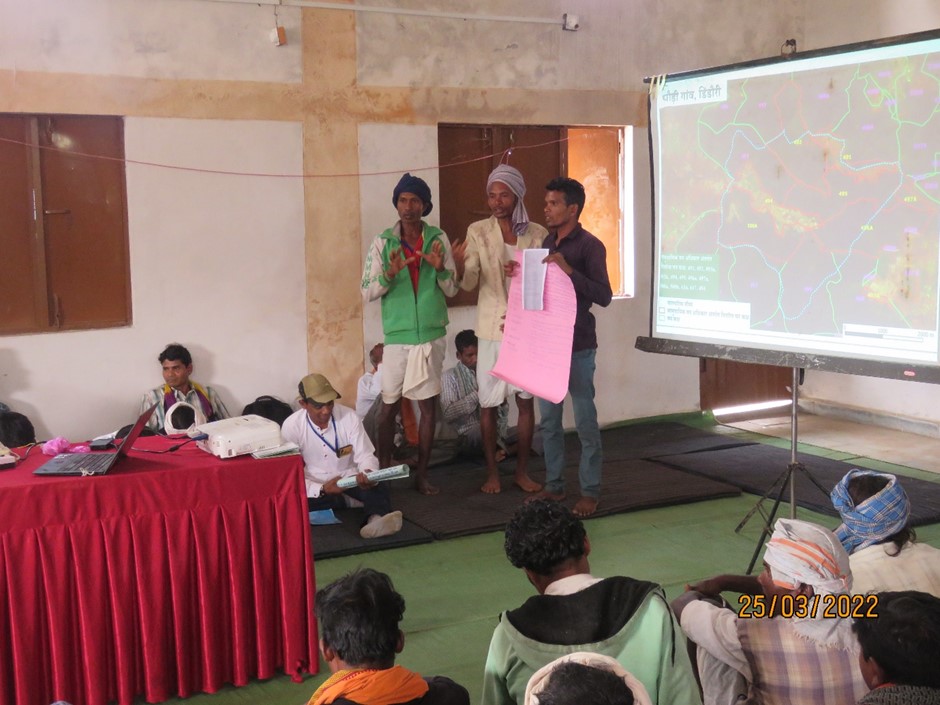
| | | | | | | “They are chopping down the forest and selling the wood. Let them slit our necks instead,” raged a Baiga elder making an angry motion resembling an axe coming down on his neck. He was one of a group of Baiga and Gond Adivasis who had assembled at a workshop on CFR management jointly organised by ATREE and the Dindori district administration in a village called Chada in March earlier in 2022. Nestled in the Maikal Hills of eastern Madhya Pradesh, Chada is a prominent village of Baiga Chak, a mountainous region of more than 40 forest villages named after the forest-dwelling Baiga community. The Baiga elder was referring to timber extraction by the forest department, a longstanding practice that has come to evoke bitter resentment among Baiga Chak residents.
The forest villages of Baiga Chak were coercively constituted by the colonial forest department as a ready pool of cheap Adivasi labour for timber extraction. Until the FRA was enacted, the residents of these villages were denied ownership rights to the land on which they lived and cultivated. Although Baigas and Gonds are native to the Maikal Hills since generations together, they were compelled to submit to the forest department and live as tenants from the late nineteenth century onwards. Their tenurial insecurity is testament to the historical injustice that Baiga Chak represents.
| | |
|
| |
|
|---|
|
| | | | |  |
|
| |
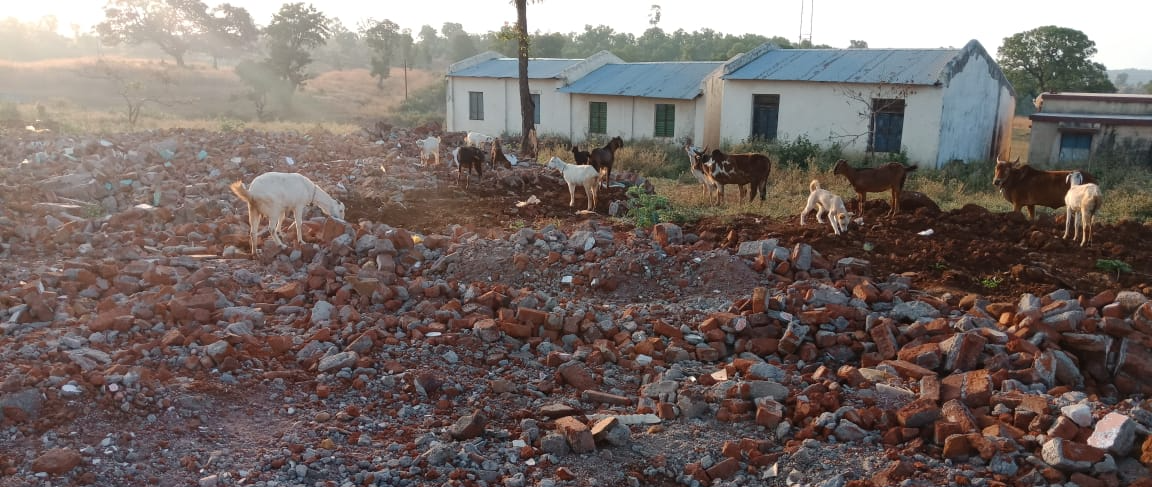
| | | But, since the late 1990s, these villages have turned into a site of vigorous opposition to coupe-felling, the formal term that the forest department employs for its timber extraction activity. Baiga Chak residents resist coupe-felling because they contend that it progressively degrades the forest. |
|
| |
|
|---|
|
| | | Water sources are diminishing and so are medicinal plants and forest foods. The vanishing of native vegetation has worsened with the rapid spread of Lantana camara, Parthenium hysterophorus, and other invasive species, aided by canopy opening due to coupe-felling. |
| | |
| |
|
|---|
|
| | | | | Capacity building for CFR Management Planning in central India |
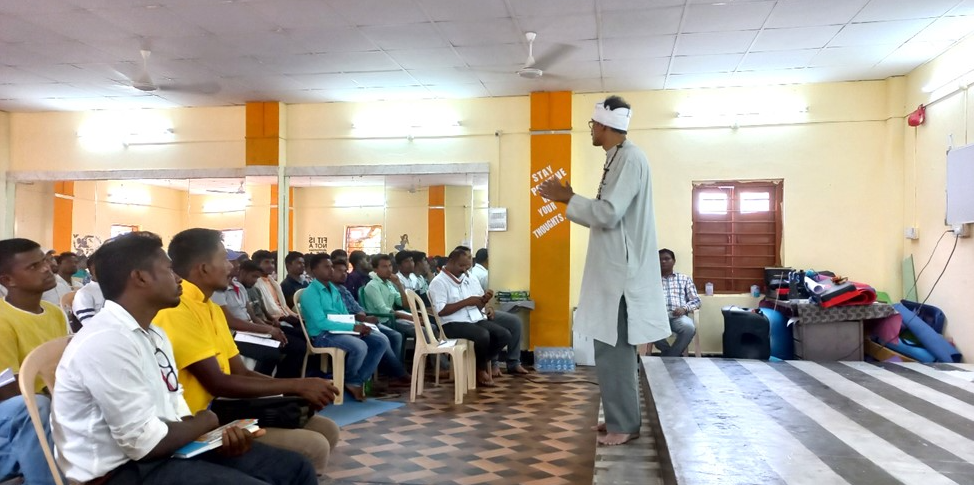
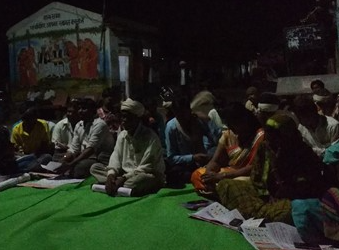
| | | | | | | While overall implementation of the CFR provisions is lagging, CFR rights have now been recognized for over 6,000 villages in Maharashtra and 4000 villages in Chhattisgarh. However, claiming and recognising CFR rights is only the first step towards the realization of CFR provisions. The FRA empowers the gram sabhas as decision-making bodies for the management and governance of their CFR areas. Hence, after recognition, it is essential that the community takes ownership of their CFR area by initiating a CFR planning exercise to develop a management plan and implement it. The main objective of this exercise is to help the communities think through systematically about how they would manage the resource in a way that protects wildlife, enhances livelihoods, ensures equitable distribution of benefits, and is ecologically sustainable. The planning and management process itself mobilizes the village community and builds the capacities of the Gram Sabha (village general body) and the CFR Management Committee (CFRMC) to manage its CFR and progress towards sustainable livelihoods. We have found that many villages are grappling with the issue of how to initiate CFR management. Through our field experience, interaction with civil society organizations (CSOs) facilitating these CFR-related processes, and examination of successful cases of CFR management, we have delineated the main steps to initiate the CFR management process:
1. Understanding the current status of the CFR Area
2. Assessing villagers' needs from the CFR area and their significance
3. Assessing threats to the CFR area
4. Plan for addressing the threats and the needs
5. Management for enhancing forest-based livelihood
6. Democratic process and regulation
7. Support and assurances are required from state agencies and others | | |
| | | | |
| |
|
|---|
|
| | | | | Socio-ecological Impacts of and Barriers to CFR management: Preliminary Insights from Maharashtra | | |
| | | | | | | The Community Forest Resource (CFR) rights provision of the Forest Rights Act, 2006 of India is a major step towards decentralised forest governance. It recognizes the rights of forest-dwelling communities to use and manage their traditional forest resources. Though CFR rights recognition has been slow across most of India, some regions such as eastern Maharashtra have seen extensive recognition of CFR rights with more than 5000 villages since 2012. | | |
|
| |
|
|---|
|
| | | | | Recognition of rights is the first important step towards positive and equitable livelihood and conservation outcomes. However, a realization of these outcomes depends upon the collective decision-making processes adopted at the local level and the policy support provided post-recognition. |
|
| |
|
|---|
|
| | | | | In that context, it becomes important to understand the ecological and socioeconomic transformative potential of CFRs, and the pathways barriers to realizing it, which in turn can inform thinking about post-claims policy support. We aim to understand whether and under what conditions CFR management can realize its transformative potential, i.e., enhance livelihoods equitably, empower communities and conserve/regenerate forests. |
| | | | |
| |
|
|---|
|
| | | | | Gram Sabha Federations: The next step in CFR-based forest management? | | |
| | | | | | | Thousands of villages across India that have received community forest resource rights are expected to receive livelihood benefits from the sale of non-timber forest products. But there are several barriers to CFR holding gram sabhas for accessing markets depending on the nature of the NTFP. One way to overcome these challenges is to form groups or collectives – to achieve economies of scale, share market knowledge and also for learning skills.
In 2015, Maharashtra state deregulated the sale of tendu-patta, one of the most important forest products in central India. With the deregulation of tendu-patta, gram sabhas (villages) who have community forest resource rights can sell tendu leaves harvested from their community forests independent of the state (i.e. the Forest Department). Since 2015 several gram sabhas have formed groups or collectives for the sale of tendu. I observed one such group of gram sabhas in the Korchi taluka of Gadchiroli district in Maharashtra called the ‘Mahagramsabha’ from 2019-2021.
I saw that since the formation of the Mahagramsabha important changes are being made in the auction system for tendu leaves and the contractual agreements between traders and gram sabhas including payments processes. Further, I saw that the price at which tendu-patta is sold by the Mahagramsabha did not significantly different from that of the state forest department, but there is more control and transparency exerted by the gram sabha group in the whole process from auction, harvest, processing and transport of the leaves.
| | |
| | | | |
| |
|
|---|
|
| | | | | Critical Wildlife Habitats: an eviction threat or a co-existence opportunity? | | |
| | | | |  | | |
| | | The Scheduled tribes and other traditional forest dwellers act, popularly known as Forest Rights Act or FRA, enacted in 2006, is the first legislation to address the historically ignored rights of forest dwellers in India. This act recognizes that forest dwellers are integral to the survival and sustainability of the forest ecosystems and confers rights to sustainably manage, utilize the resources and conserve the biodiversity therein. This act also makes a provision for the declaration of Critical Wildlife Habitats (CWHs) within PAs. It provides the possibility of modification or settlement of the rights of forest-dwellers in PAs within Protected Areas (PAs; i.e. Wildlife Sanctuaries and National Parks) in the interest of wildlife conservation.
The CWH provisions in the FRA require first the full recognition of the rights of forest-dwellers. Following this, a case-by-case determination of whether co-existence is possible, whether some rights have to be attenuated to make it possible, or whether the relocation of forest-dwellers is the only option to prevent ‘irreversible damage’ and ‘threat to existence’ of wildlife. This determination is to be done through an exhaustive, multi-disciplinary and participatory process.
| | |
| | | | |
| |
|
|---|
|
| | | | | | |  | | |
|
| |
|
|---|
| | |
| | | | | | | | | Ashoka Trust For Research In Ecology And The Environment,
PO, Royal Enclave, Srirampura, Jakkur, Bengaluru, Karnataka 560064
communications@atree.org |+91-80-23635555 © 2022 ATREE | www.atree.org |
|
| |
|
|---|
| | |
|
|
|